Title

Try searching by key words, order- or product code or serial number e.g. “CM442” or “Technical information”
Enter at least 2 characters to start the search.

Chromatography

Explore measurement points and instrument selection across the chromatography process

F F P LS LS A Cond A pH P T A Cond A pH A UV F - クロマトグラフィ プロセス 出力 入力 入力 出力 バブル トラップ 塔 F - Chromatographieprozess Auslass Einlass Einlass Auslass Luftblasen-falle Säule F - Chromatography process Output Input Input Output Bubble trap Column
Inlet flow
Gradient pump flow
Pressure sensor before the bubble trap
Air trap high level sensor
Air trap low level sensor
Pre-column conductivity sensor
Pre-column pH sensor
Pre-filter pressure sensor
System temperature
Post-column conductivity sensor
Post-column pH sensor
UV sensor
Measuring point Product Alternatives
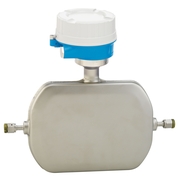
Flow measurement in: Inlet flow

Endress+Hauser offers a suite of analytical instruments ideal for this stage.

Alternatives:

General Requirements:

  • Cleanability (CIP/SIP), no dead legs
  • Fully self-drainable in horizontal installations
  • Design according to ASME BPE standard
  • High reproducibility over a large flow range
  • Smallest hold-up volume

Technical requirements:

  • Measuring task: Liquids
  • Process pressure: 0 to 16 bar (0 to 232 psi)
  • Process temperature: max 40°C (104°F)
  • CIP/SIP: 130°C (266°F)
  • Density: 0.9 to 1.5 g/cm³
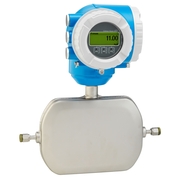
Flow measurement in: Gradient pump flow

Endress+Hauser offers a suite of analytical instruments ideal for this stage.

Alternatives:

General Requirements:

  • Cleanability (CIP/SIP), no dead legs
  • Fully self-drainable in horizontal installations
  • Design according to ASME BPE standard
  • High reproducibility over a large flow range
  • Smallest hold-up volume

Technical requirements:

  • Measuring task: Liquids
  • Process pressure: 0 to 16 bar (0 to 232 psi)
  • Process temperature: max 40°C (104°F)
  • CIP/SIP: 130°C (266°F)
  • Density: 0.9 to 1.5 g/cm³
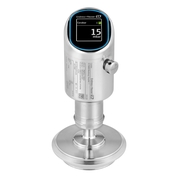
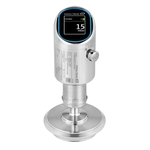
Pressure measurement in: Pressure sensor before the bubble trap

Endress+Hauser offers a suite of analytical instruments ideal for this stage.

Alternatives:

General Requirements:

  • Front flush mounting for drainability
  • Fast temperature shock response
  • High linearity
  • Design according to ASME BPE standard

Technical requirements:

  • Measuring task: Pressure
  • Process pressure: 0 to 16 bar (0 to 232 psi)
  • Max. process temperature: 40°C (104°F)
  • CIP/SIP: 130°C (266°F)
  • Density: 0.9 to 1.5 g/cm³
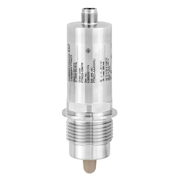
Level measurement in: Air trap high level sensor

Endress+Hauser offers a suite of analytical instruments ideal for this stage.

Alternatives:

General Requirements:

  • Cleanability, no dead legs
  • Small vessel mounting
  • Design according to ASME BPE standard

Technical requirements:

  • Measuring task: Point Level / Liquids
  • Process pressure: 0 to 16 bar (0 to 232 psi)
  • Max. process temperature: 40°C (104°F)
  • CIP/SIP: 130°C (266°F)
  • Density: 0.9 to 1.5 g/cm³
Level measurement in: Air trap low level sensor

Endress+Hauser offers a suite of analytical instruments ideal for this stage.

Alternatives:

General Requirements:

  • Cleanability, no dead legs
  • Small vessel mounting
  • Design according to ASME BPE standard

Technical requirements:

  • Measuring task: Point Level / Liquids
  • Process pressure: 0 to 16 bar (0 to 232 psi)
  • Max. process temperature: 40°C (104°F)
  • CIP/SIP: 130°C (266°F)
  • Density: 0.9 to 1.5 g/cm³
Analysis measurement in: Pre-column conductivity sensor

Endress+Hauser offers a suite of analytical instruments ideal for this stage.

General Requirements:

  • High accuracy
  • Wide measurement range
  • Suitable for CIP/SIP and autoclaves
  • Fast response time
  • Design according to ASME BPE standard

Technical requirements:

  • Measuring task: Conductivity
  • Process pressure: 0 to 16 bar (0 to 232 psi)
  • Max. process temperature: 40°C (104°F)
  • CIP/SIP: 130°C (266°F)
  • Density: 0.9 to 1.5 g/cm³
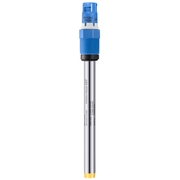
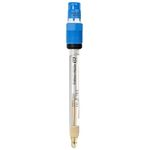
Analysis measurement in: Pre-column pH sensor

Endress+Hauser offers a suite of analytical instruments ideal for this stage.

Alternatives:

General Requirements:

  • High accuracy
  • Suitable for CIP/SIP and autoclaves
  • Long-term stability
  • Easy and accurate calibration
  • Design according to ASME BPE standard

Technical requirements:

  • Measuring task: pH
  • Process pressure: 0 to 16 bar (0 to 232 psi)
  • Max. process temperature: 40°C (104°F)
  • CIP/SIP: 130°C (266°F)
  • Density: 0.9 to 1.5 g/cm³
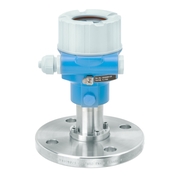
Pressure measurement in: Pre-filter pressure sensor

Endress+Hauser offers a suite of analytical instruments ideal for this stage.

Alternatives:

General Requirements:

  • Front flush mounting for drainability
  • Fast temperature shock response
  • High linearity
  • Design according to ASME BPE standard

Technical requirements:

  • Measuring task: Pressure
  • Process pressure: 0 to 16 bar (0 to 232 psi)
  • Max. process temperature: 40°C (104°F)
  • CIP/SIP: 130°C (266°F)
  • Density: 0.9 to 1.5 g/cm³
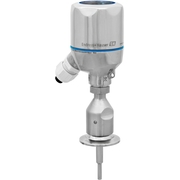
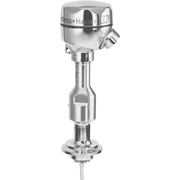
Temperature measurement in: System temperature

Endress+Hauser offers a suite of analytical instruments ideal for this stage.

Alternatives:

General Requirements:

  • Cleanability, no dead legs
  • Installation in thermowell
  • Easy calibration
  • Long-term stability
  • Linearity over the measurement range
  • Design according to ASME BPE standard

Technical requirements:

  • Measuring task: Thermometer
  • Process pressure: 0 to 16 bar (0 to 232 psi)
  • Max. process temperature: 40°C (104°F)
  • CIP/SIP: 130°C (266°F)
  • Density: 0.9 to 1.5 g/cm³
Analysis measurement in: Post-column conductivity sensor

Endress+Hauser offers a suite of analytical instruments ideal for this stage.

General Requirements:

  • High accuracy
  • Wide measurement range
  • Suitable for CIP/SIP and autoclaves
  • Fast response time
  • Design according to ASME BPE standard

Technical requirements:

  • Measuring task: Conductivity
  • Process pressure: 0 to 16 bar (0 to 232 psi)
  • Max. process temperature: 40°C (104°F)
  • CIP/SIP: 130°C (266°F)
  • Density: 0.9 to 1.5 g/cm³
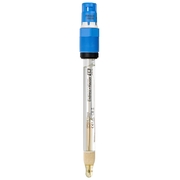
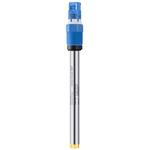
Analysis measurement in: Post-column pH sensor

Endress+Hauser offers a suite of analytical instruments ideal for this stage.

Alternatives:

General Requirements:

  • High accuracy
  • Suitable for CIP/SIP and autoclaves
  • Long-term stability
  • Easy and accurate calibration
  • Design according to ASME BPE standard

Technical requirements:

  • Measuring task: pH
  • Process pressure: 0 to 16 bar (0 to 232 psi)
  • Max. process temperature: 40°C (104°F)
  • CIP/SIP: 130°C (266°F)
  • Density: 0.9 to 1.5 g/cm³
Analysis measurement in: UV sensor

Endress+Hauser offers a suite of analytical instruments ideal for this stage.

General Requirements:

  • Fast response time
  • Cleanability (CIP/SIP), gap-free design
  • Fully self-drainable
  • Design according to ASME BPE standard
  • Smallest hold-up volume

Technical requirements:

  • Measuring task: Concentration
  • Process pressure: 0 to 16 bar (0 to 232 psi)
  • Max. process temperature: 40°C (104°F)
  • CIP/SIP: 130°C (266°F)
  • Density: 0.9 to 1.5 g/cm³
Chromatography skid @Ease

Key instrumentation challenges in the chromatography process

Chromatography process performance is fundamentally dependent on the quality and reliability of process measurements. Critical quality attributes (CQAs) such as purity, yield, aggregate levels, and contaminant clearance are directly influenced by the control of critical process parameters (CPPs), including flow, pressure, pH, conductivity and UV absorbance. key instrumentation challenges are:

  • Maintaining accurate buffer preparation and gradient control: If conductivity or flow measurements drift, the gradient profile changes and product fractions may no longer elute where expected.
  • Reliable product detection and fraction collection: A major control challenge is determining exactly when the target protein starts eluting, when impurities appear and when to switch collection vessels. Traditionally, UV measurement is the primary control signal. Missing the correct collection window directly impacts yield and purity.
  • Fouling, blockage, and pressure monitoring: Columns gradually foul due to host cell proteins, aggregates, lipids and particulates. Instrumentation must detect rising differential pressure, pump performance degradation and filtert fouling. Pressure trends are often the earliest indication of a developing problem.
Portfolio highlights

Explore our innovations for your chromatography process

/
FAQ

Frequent questions about the chromatography process